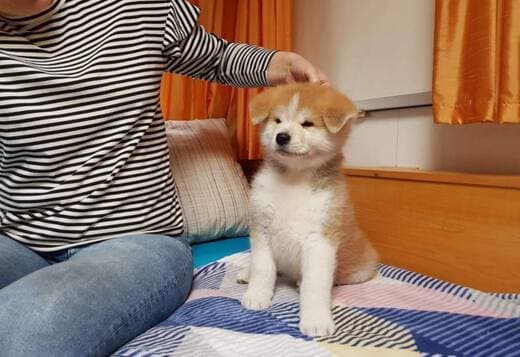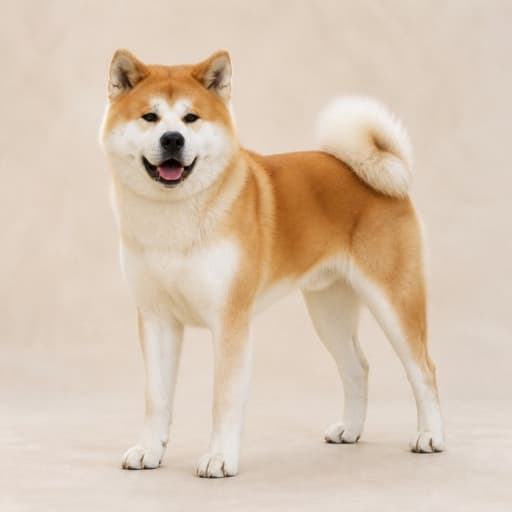
Who is this breed suited to?
The Japanese Akita Inu appeals to someone who appreciates a substantial spitz and can provide space, consistent training and controlled introductions. Meet mature dogs before deciding whether their response to unfamiliar people and animals fits your household.
Daily time commitment
The Royal Kennel Club's adult exercise guide exceeds two hours daily. Include time for coat checks and calm handling as well as walks, and do not treat free access to a garden as equivalent to shared activity.
Coat and everyday care
Brush the protective double coat several times weekly and adjust the routine when loose undercoat builds up. Learn to reach through the coat gently instead of only smoothing the surface.
Challenges to plan for
A large, strong dog needs reliable lead handling and secure boundaries. The curled tail and plush coat should not distract from assessing how the individual behaves around other dogs and daily visitors.
How does it compare?
Japanese Akita Inu and American Akita are distinct in the Royal Kennel Club classification. The American development selected a heavier, more substantial build; ask which type and registration the seller actually means.
Questions to ask a breeder
Can I meet the adults and watch their ordinary walking and visitor routine? Which registry identifies the parents as Japanese Akita Inu, and what documented screening and puppy socialisation can you show?
Sources and further reading
Reviewed October 2026. Breed tendencies are not a prediction for an individual dog. Exercise guidance concerns healthy adults; age, condition and weather change the plan.