
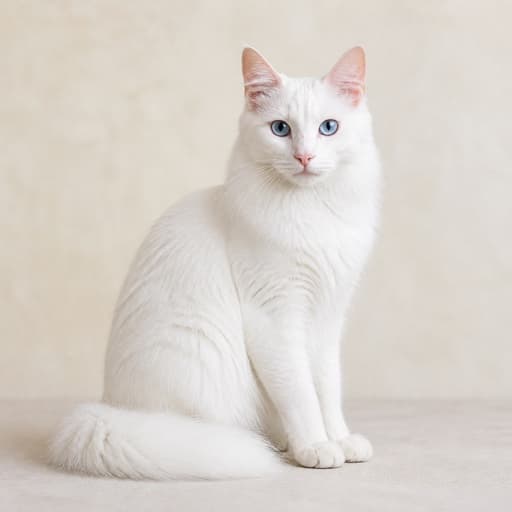
Who is this breed suited to?
The Turkish Angora may suit someone who enjoys an interactive, agile cat and can provide safe elevated places to explore. Its elegant appearance should not be mistaken for a purely ornamental pet. Meet adults and assess the actual cat's confidence and handling preferences before deciding household fit.
Daily time commitment
Provide stable climbing routes, engaging toys and shared play, checking the tops of furniture for objects that could fall. Let the cat investigate at its own pace and offer a retreat during busy activity. The breed's reputation for companionship does not prescribe one daily time quota.
Coat and everyday care
Its silky single coat is usually easier to maintain than a dense Persian coat, but still needs combing and checks for loose hair or tangles. CFA notes that older cats may need more frequent help. Establish a gentle routine before reduced flexibility makes self-care harder.
Challenges to plan for
White colour and blue eyes can be associated with congenital deafness, but appearance alone cannot establish hearing ability. Ask about hearing assessment when relevant. Avoid selecting only for white or odd-eyed appearance, and do not assume that a coloured cat is free of every health concern.
How does it compare?
The Turkish Van is a separate, more substantial breed with a different standard and characteristic head-and-tail markings. Turkish Angoras occur in many colours; neither all-white appearance nor shared Turkish association makes these cats interchangeable.
Questions to ask a breeder
Can I see registration, family health records and any relevant hearing-test results? Ask for a combing demonstration and discuss how adult relatives use climbing spaces, respond to unfamiliar people and tolerate handling without being held against their wishes.
Sources and further reading
- CFA: Turkish Angora
- Cats Protection: hearing loss and caring for deaf cats
- CFA: Turkish Van comparison
Reviewed October 2026. Breed tendencies do not predict an individual cat. Age, health, upbringing and environment all affect care and behaviour.