
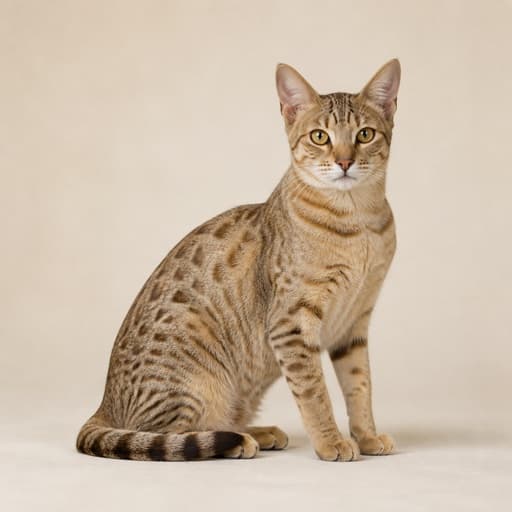
Who is this breed suited to?
The Ocicat may suit people wanting an athletic, sociable cat that participates in household activities. Its spotted appearance was developed from domestic breeds, without requiring wild-cat ancestry. Meet the individual cat before assuming an outgoing breed reputation guarantees confidence in every situation.
Daily time commitment
Schedule interactive play, climbing and simple reward-based games, with quiet recovery between them. Retrieving or harness training should follow the individual cat's interest.
Coat and everyday care
The short coat generally needs light grooming to remove loose hair. Use a gentle rubber brush or other suitable tool and check the skin during handling.
Challenges to plan for
The wild-looking pattern can distract from ordinary domestic-cat needs: secure windows, scratching places and space to withdraw. A second pet does not automatically solve loneliness, and introductions should be managed with separate resources and a gradual pace.
How does it compare?
The Egyptian Mau is also spotted, but has its own naturally developed breed history. The Ocicat was created through domestic breeding involving Siamese, Abyssinian and American Shorthair ancestry; the similar surface pattern does not make the two breeds interchangeable.
Questions to ask a breeder
Ask how the parents' health was assessed and which inherited-condition tests are appropriate to the line. Request dated veterinary records and information about the kitten's confidence with visitors, carriers and grooming. Discuss the breeder's plan if the household match proves unsuitable.
Sources and further reading
Reviewed October 2026. Breed tendencies do not predict an individual cat. Age, health, upbringing and environment all affect care and behaviour.