
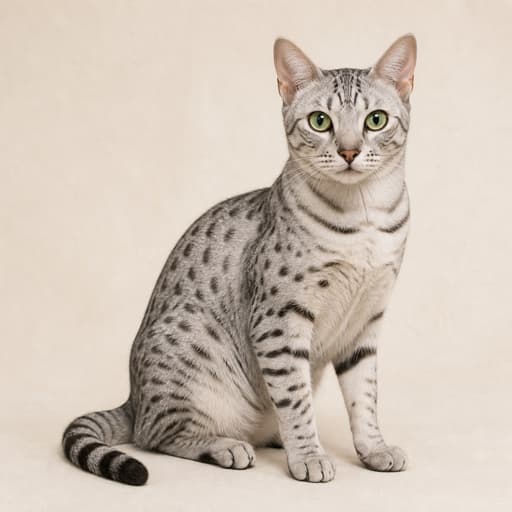
Who is this breed suited to?
The Egyptian Mau fits a household that enjoys an athletic, interactive cat and respects its choices about handling. Some are cautious with unfamiliar people, so a quiet retreat and patient introductions matter more than expecting instant friendliness from every kitten.
Daily time commitment
Make space for climbing, toy chasing and shared games throughout the day. A safely enriched apartment can offer useful vertical space; there is no breed rule requiring a large house. Harness outings are an optional learned activity, not an automatic talent.
Coat and everyday care
CFA recommends weekly combing for the short coat. Check the cat's response to the tool and make handling brief and comfortable.
Challenges to plan for
An agile cat can reach unexpectedly high shelves and open windows. Secure those hazards and provide intended perches.
How does it compare?
The Ocicat also offers a spotted domestic-cat appearance, but was deliberately developed from other domestic breeds. The Mau has its own history, body type and variable social preferences; selecting by spots alone misses important differences.
Questions to ask a breeder
Ask what hereditary screening was performed on both parents, including pyruvate kinase deficiency where relevant, and whether urinary problems occur in the family. Discuss how kittens experience visitors, grooming and carriers, and request dated veterinary records.
Sources and further reading
Reviewed October 2026. Breed tendencies do not predict an individual cat. Age, health, upbringing and environment all affect care and behaviour.