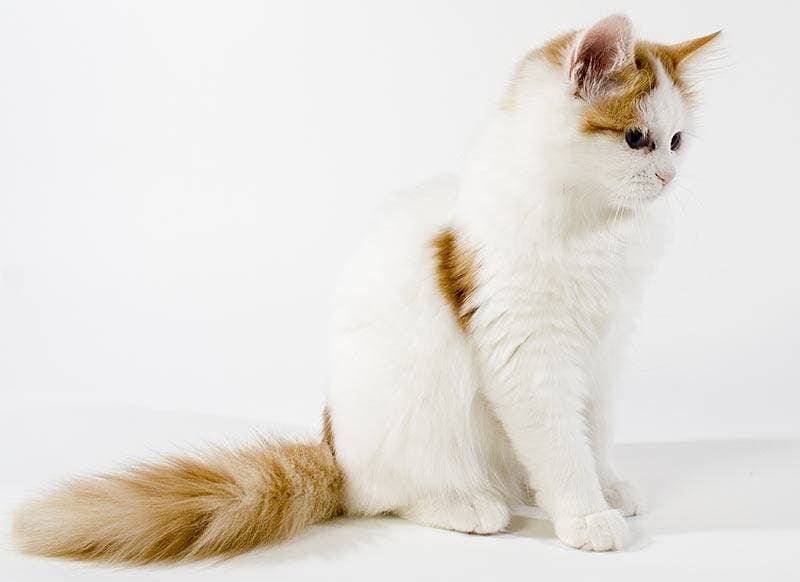
The Turkish Van is a striking, active cat often recognized by a mostly white body and color on the head and tail. Its appeal goes beyond markings: many owners enjoy a curious companion that wants to investigate whatever is happening. Before choosing one, consider whether your home can accommodate climbing, play and an individual cat’s preferences about handling.
A distinctive breed
The Cat Fanciers’ Association breed profile describes the Turkish Van as separate from the Turkish Angora. The Van is associated with the Lake Van region and has a substantial build, a semi-long coat and a characteristically colored tail. Eyes may be amber, blue or one of each. A similar coat pattern alone does not establish a cat’s pedigree.
Registration documents are more useful than a seller’s claim that every white cat with a colored tail is a Van. Ask which registry issued the papers and whether they match the kitten and its parents. If adopting without a pedigree, enjoy the cat as an individual without paying for an unverified label.
Plan for an active housemate
Provide stable climbing furniture, interesting viewpoints and daily interactive games. Secure shelves and keep fragile items away from tempting routes. A large, athletic cat needs equipment that remains steady during a landing, not simply a tall tower with a small base.
Let the cat approach for affection. Being sociable does not mean enjoying prolonged carrying or being held by children. Teach everyone to offer a hand calmly, watch the response and allow the cat to leave. Quiet resting places are as necessary as play spaces.
Does every Turkish Van like swimming?
The breed has a reputation for interest in water, but an individual may be fascinated, indifferent or frightened. Never put a cat in a bath or pool to demonstrate a breed trait. Close washing machines and check them before use; supervise access to filled tubs and other water hazards.
There is no reason to impose a fixed bathing schedule on a clean, healthy pet. If a bath is needed, seek advice on suitable products and gentle handling. A cat’s comfort should decide the pace, rather than the photograph you hope to take.
Coat care and health questions
Use short brushing sessions to learn where tangles form, increasing attention when the coat sheds. Check the chest, armpits and rear gently. Ask a groomer or vet for help with tight mats instead of cutting close to skin with scissors.
Turkish Vans are not guaranteed to be safe for people with cat allergies. Anyone with significant symptoms should discuss pet ownership with their own clinician and spend time around the individual animal before committing. Coat texture and eye color do not prove that a kitten is healthy.
Check the size of the carrier and resting furniture as the cat matures. Equipment chosen for a small kitten may become cramped, and a narrow perch can discourage an adult from using a space it previously enjoyed.
Before bringing one home
Request veterinary records, feeding details and information about the kitten’s upbringing. Prepare a carrier, accessible litter tray and a quiet settling-in room. Introduce household activity gradually and keep the first days predictable. A thoughtful match matters more than finding the most dramatic markings.