Who is this breed suited to?
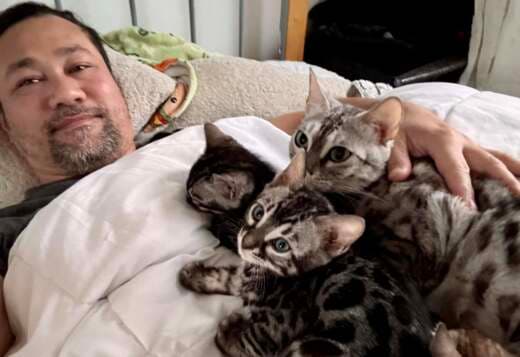
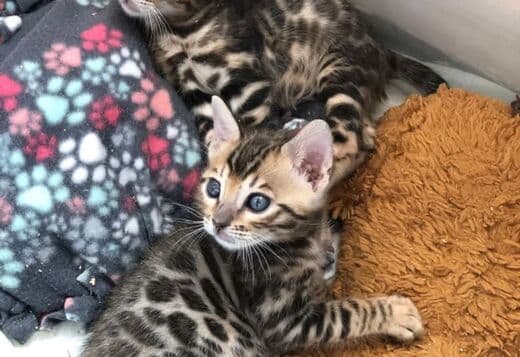
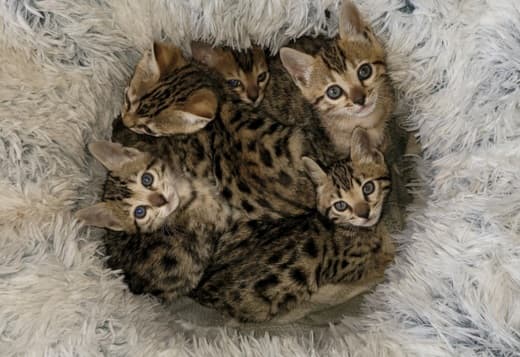
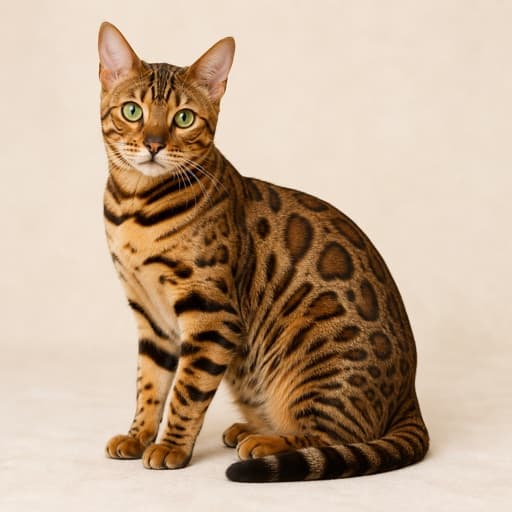
The Bengal is best considered by people who actively want a curious, athletic companion and can provide an interesting home. Its dramatic patterned coat should not outweigh the practical demands of an energetic cat or the temperament of the individual kitten.
Daily time commitment
Offer climbing routes, interactive hunting games and changing puzzles rather than relying on floor toys alone. Some Bengals enjoy learning tasks or investigating water, but neither interest is universal.
Coat and everyday care
A soft brush used weekly generally maintains the coat. Ask about the specific coat variety and routine, rather than assuming every Bengal has identical fur or bathing needs.
Challenges to plan for
Activity and curiosity can be demanding, while vocal behavior varies considerably between cats. The breed has wildcat ancestry, so clarify documented pedigree and generation before placement.
How does it compare?
The Abyssinian offers another highly active, exploratory companion, with a ticked coat instead of Bengal spots or marbling.
Questions to ask a breeder
Request the parents' relevant genetic results and dated heart-screening reports. CFA distinguishes echocardiography for hypertrophic cardiomyopathy from genetic screening. Ask how the breeder selects temperament, socializes kittens and documents ancestry, and what support follows if the cat struggles to settle.
Sources and further reading
Reviewed October 2026. Breed tendencies do not predict an individual cat. Age, health, upbringing and environment all affect care and behaviour.