
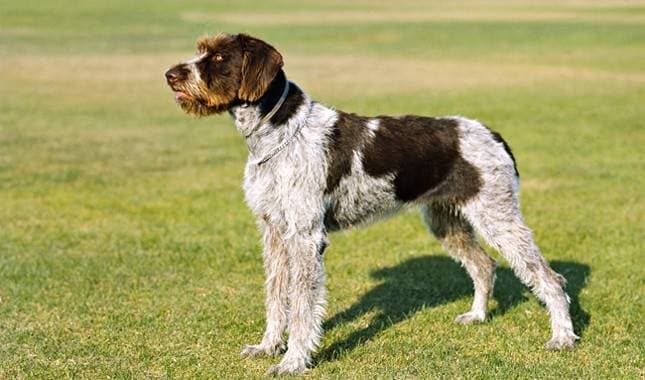
The German Wirehaired Pointer is an active gundog developed for versatile work on land and in water. Its wiry coat, beard and alert expression are distinctive. It can also be a companion, but a good home must provide more than a garden and occasional weekend exercise.
Give the dog meaningful activity
Many German Wirehaired Pointers enjoy exploring, following scent and working with a handler. Combine daily walks with short training sessions, food searches and suitable games. Match the amount and intensity to the dog's age, fitness and health, building demanding exercise gradually.
A puppy should not be expected to complete an adult dog's running or retrieving schedule. Include plenty of rest and teach calm behavior after activity. If an adult barks or destroys objects, consider unmet needs, distress and possible medical causes rather than assuming it is deliberately being difficult.
An apartment is not automatically unsuitable, but the daily routine must still work. Think through access to exercise, noise, space to rest and what happens during working hours. A large house alone cannot meet a working dog's needs either.
Train with clear rewards
Start with name response, recall, loose-leash walking and settling on a mat. Keep lessons short and reward the behavior you want. Practice in quiet places before expecting success near wildlife or other strong distractions.
Independent searching is part of the breed's background. Use a leash, a suitable long line or a secure enclosure where chasing could be dangerous. A strong sense of smell does not make a dog immune to traffic, getting lost or becoming exhausted. Do not assume every individual is a confident swimmer or send a dog into unsafe water. For retrieving games, choose a suitable dummy or safe toy rather than sticks that can splinter or injure the mouth.
People, children and other pets
Some dogs are reserved with unfamiliar people. Introduce visitors calmly and let the dog observe without being crowded. Socialization should build confidence, not force greetings. A dog that growls or guards access to a person needs thoughtful assessment, not a label such as jealous or dominant.
Supervise children and provide a place where the dog can rest undisturbed. A lively adolescent may accidentally knock a child over, so manage energetic play. Compatibility with other dogs varies, and strong hunting interest can make living with cats or small animals difficult. Plan introductions and secure separation according to the individual.
Coat and health care
Check the beard, feet and coat after outdoor activity for trapped debris, ticks or grass seeds. Ask an experienced groomer how to maintain the coat's texture without painful handling. Keep ears clean as advised, trim nails carefully and introduce toothbrushing gradually.
Ask breeders for relevant hip, eye and thyroid screening records and discuss family health history with your veterinarian. Feed a complete diet in appropriate portions and track body condition. A fit-looking dog can still develop inherited or acquired illness.
Practice comfortable time alone in small steps and arrange a reliable caregiver when needed. Choose this breed because its daily routine suits your life, not simply because it looks rugged or is described as endlessly energetic.


