
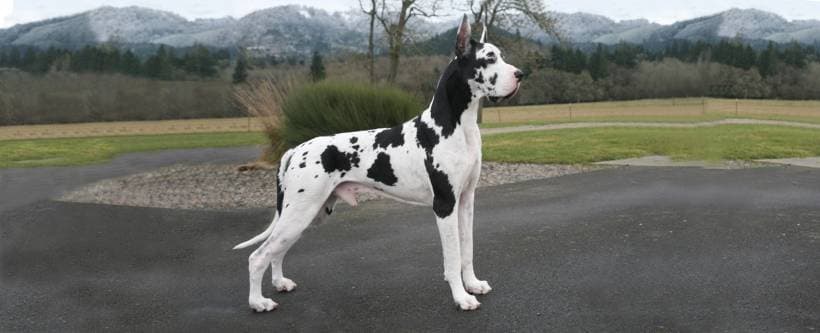
Living with a Great Dane involves more than finding room for a large bed. Its height and strength affect greetings, travel, household layout and medical care. Good planning helps the dog participate comfortably in family life without expecting it to behave like a trained guardian or a child's nanny.
Arrange usable space
Choose a resting area where the dog can lie on its side and get up without blocking a busy doorway. Nonslip flooring can help on routes to the door, bowls and bed. Consider whether narrow stairs or awkward turns will remain manageable if the dog becomes stiff or unwell.
Place fragile or dangerous items beyond the reach of a standing dog and its tail. Kitchen counters may be easily accessible, so put food away and use barriers during preparation if needed. A reliable routine is more effective than reacting after the dog has learned to find snacks there.
Build manners before size becomes a problem
Reward four feet on the floor during greetings and practice waiting at doors. Teach loose-leash walking in quiet places, using equipment that fits well and an adult handler who can manage the dog safely. Keep sessions short and consistent.
A dog does not need to understand hundreds of human sentences to learn useful daily skills. Claims about exceptional vocabulary should not replace patient teaching. Use clear cues, reward success and practice in different easy settings before expecting the dog to cope with heavy distractions.
Teach the dog to relax on a mat while visitors arrive or meals are served. Do not expect it to decide which people are intruders or physically intervene in arguments. A giant dog acting on its own can cause injury even without biting.
Children, visitors and other pets
Adults must supervise children with Great Danes. Gentle breed descriptions are not a reason to leave a baby alone with a dog. Prevent climbing, pulling and disturbance during sleep or meals, and give the dog a retreat that children cannot enter.
Introduce visitors calmly and let the dog choose whether to approach. Manage other pets according to their actual relationship, with separate resources and rest areas when needed. If guarding or fear develops, use safe separation and seek professional help rather than testing the dog's tolerance.
Balance activity and recovery
Provide daily walks, sniffing and appropriate play, adjusted for age and health. Growing puppies should not carry heavy loads or be forced to swim to enlarge their chests. Adult dogs also need gradual conditioning rather than sudden demanding exercise.
Rest is part of a healthy routine. A Dane sleeping comfortably is not necessarily lazy, and constant stimulation can make settling harder. Practice short, relaxed periods apart and arrange care for absences the dog cannot comfortably manage.
Prepare for handling and expenses
Introduce examination of feet, ears and teeth with rewards. Practice entering a vehicle and using a suitable ramp before it is urgently needed. Keep a plan for transporting an injured or weak dog, including help from another person when necessary.
Food intake varies; do not assume a Great Dane eats the same amount as a smaller breed. Measure a complete diet and monitor body condition with veterinary guidance. Medication, equipment and emergency care may also cost more because of size.
Discuss relevant health screening, joint comfort and signs of heart disease or bloat with your veterinarian. Keep records and emergency contacts available to every caregiver. A successful routine makes ordinary care predictable and safe, while allowing the dog to be a companion rather than an oversized solution to security or childcare.


