
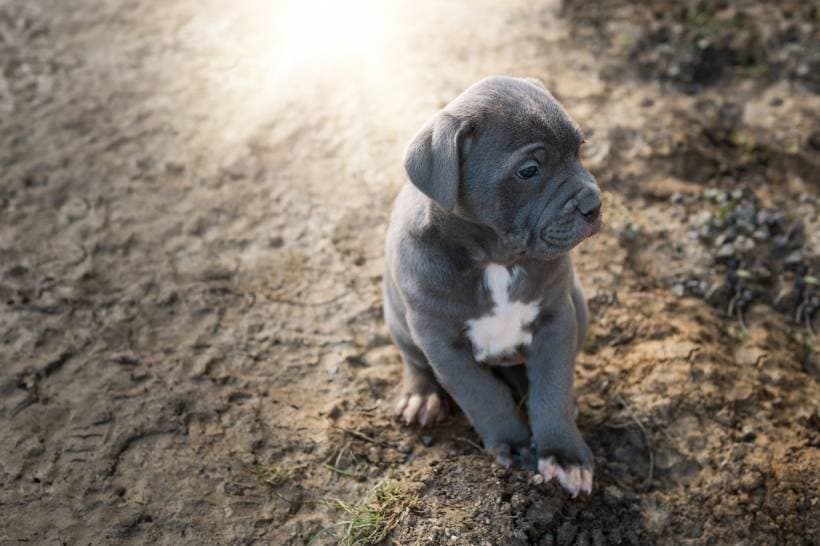
Some people believe Great Danes are well trainable, but there is also the opposite view, so which one is correct?I believe that any dog should be initially educated, not trained, including the Great Dane. You need to communicate with your dog every day to work out in it all the necessary qualities and skills. In any case, you need to find a common language, to experiment, to seek a new approach to the puppy, to come up with some tricks and tweaks. Remember, that you cannot influence the dog by force. If you try to destroy and transcend the nature of the Great Dane, you will get a dangerous animal. It is better not to take risks, and to bring up a dog as a child, so this can benefit the proper development of dog.
The process of dog training is challenging and you will need a lot of patience before you get tangible results. Set priorities in relation to the Great Dane; educate it strictly but fairly, sometimes punishing it if it has deserved.We must be consistent in education.
One of the main issues in the education is punishment. For what it can be punished and how to do it correctly. In any case, you need to treat it very carefully and meticulously, of course, and if you delay the punishment it would not understand; how can a dog perceive penalty after 30 minutes after the commission of the offense. Great Danes understand lessons at once, which is, from the first time, so be sure that they would well absorb everything at once, because after it does not work. Initially, you need to teach your dog to obey all the commands; Danes have to know these commands well Come! You must not! . The main thing is not to make mistakes from the beginning, because it is practically impossible to retrain the dog.
Great Dane is considered a guard dog, so in any case, it is able to protect its master. The dog is able to assess the situation and help the person properly and quickly, especially if it was taught.If the situation is critical, there is a threat to the life of the owner, the dog may begin to act without its knowledge.
Great Danes are smart dogs and there should not be big problems with their education. Instill the necessary skills and establish close contact with it; when it happens, you should know that you have already laid the foundation of its nature.
Updated Health Guidance
Veterinary guidance for large-breed puppies like the Great Dane has advanced meaningfully since this article was written, particularly around bloat (gastric dilatation-volvulus, or GDV), a life-threatening emergency this breed is especially prone to. Vets now commonly recommend a prophylactic gastropexy, a procedure that tacks the stomach to the body wall to prevent it from twisting, often performed at the same time as spay or neuter surgery. Without it, roughly 1 in 5 at-risk dogs will experience a GDV episode in their lifetime; with it, the risk of the stomach actually twisting drops sharply, even though bloating itself can still occur.
Spay/neuter timing itself has also been updated: current WSAVA and AKC guidance recommends waiting until a giant breed like the Great Dane is 12 to 18 months old, later than the flat "6 months" advice common in 2016, since sex hormones support the joint development this breed depends on to avoid orthopedic problems later in life.


